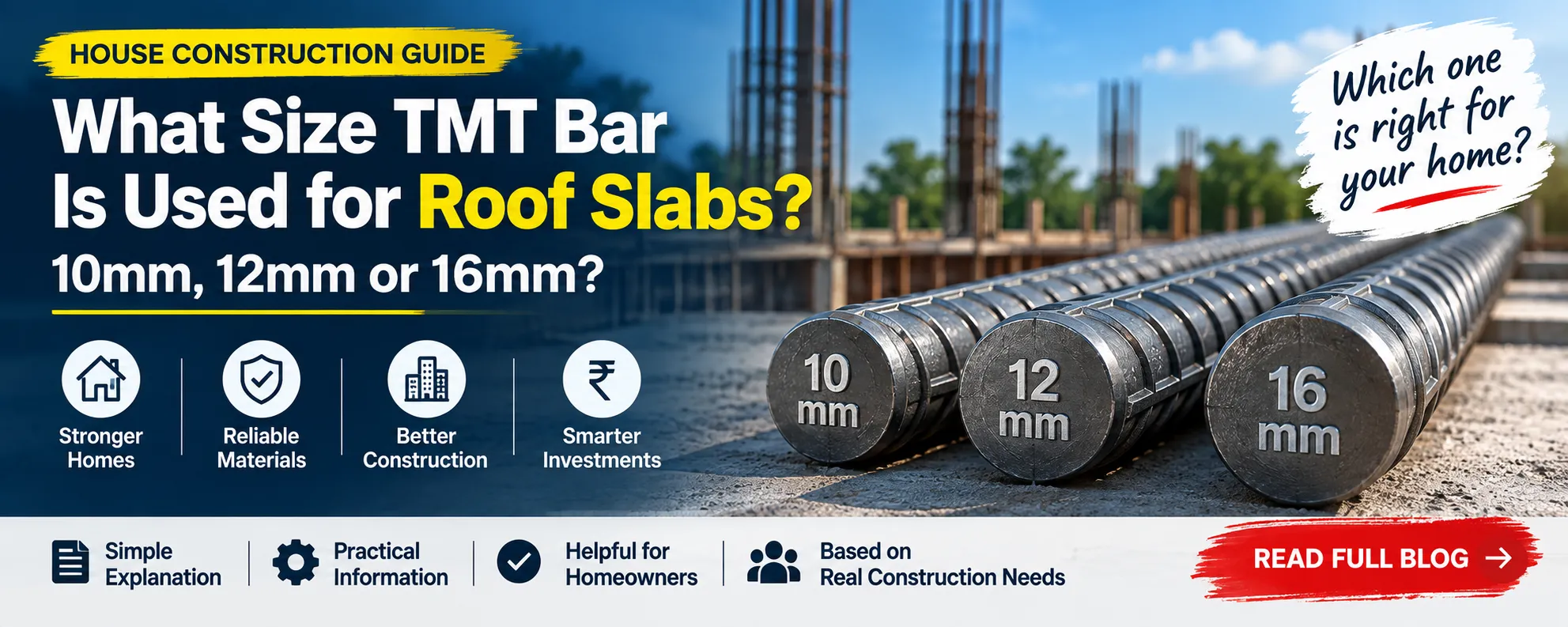
When you are building a house, you may hear your contractor or engineer asking for 10mm, 12mm, 16mm or 20mm TMT bars. For a first-time homeowner, these numbers can be confusing.
Many people simply assume that a bigger TMT bar is always better. But that is not how RCC construction works. Different bar diameters can be used for different structural requirements, and the correct size depends on the structural design of the building.
So, where are 10mm, 12mm, 16mm and 20mm TMT bars generally used?
Let’s understand the practical difference between these common TMT bar sizes and where they may appear in residential and other RCC construction.
Get the required size and grade for your project from Pahari Home Solutions.
Get Quote
What Does 10mm, 12mm, 16mm or 20mm Mean?
The number written before “mm” represents the approximate nominal diameter of the TMT bar.
For example:
- 10mm TMT bar = approximately 10mm nominal diameter
- 12mm TMT bar = approximately 12mm nominal diameter
- 16mm TMT bar = approximately 16mm nominal diameter
- 20mm TMT bar = approximately 20mm nominal diameter
As the diameter increases, the cross-sectional area and theoretical weight of the steel bar also increase.
However, diameter is only one part of reinforcement selection. The structural engineer also considers span, loading, member dimensions, spacing, concrete grade, support conditions and other structural requirements.
Quick Comparison of Common TMT Bar Sizes
| TMT Size | Approx. Weight / Metre | Common Applications |
|---|---|---|
| 10mm | 0.617 kg/m | Slab and distribution reinforcement as specified |
| 12mm | 0.889 kg/m | Slabs, beams and other RCC applications as specified |
| 16mm | 1.58 kg/m | Beams, columns and heavier reinforcement applications |
| 20mm | 2.47 kg/m | Columns, beams, foundations and heavier RCC applications |
The weights shown above are approximate theoretical values calculated from the commonly used formula D² ÷ 162. Actual supplied material should be checked against applicable standards and manufacturer specifications.
10mm TMT Bars — Where Are They Used?
10mm TMT bars are one of the commonly encountered reinforcement sizes in residential construction.
Depending on the structural drawing, 10mm bars may be specified for slab reinforcement, distribution reinforcement and other RCC applications.
10mm Bars in Roof Slabs
Homeowners frequently see 10mm reinforcement in roof slab work. However, the exact bar diameter and spacing should always follow the structural drawing.
A slab is not designed simply by saying “use 10mm bars”. The engineer determines the required reinforcement based on the structural requirements of the particular building.
10mm Bars for Distribution Reinforcement
10mm bars can also be used for distribution reinforcement or other reinforcement details where specified by the structural design.
12mm TMT Bars — Where Are They Used?
12mm TMT bars are also widely encountered in residential RCC construction.
Depending on the design, 12mm bars may be used in slabs, beams and other structural reinforcement applications.
12mm Bars in Slabs
Some structural designs may specify 12mm reinforcement in slabs depending on span, loading and other design conditions.
This does not mean that 12mm is automatically better than 10mm. The correct selection depends on the reinforcement calculation and structural detailing.
12mm Bars in Beams
12mm reinforcement can also be specified in beam reinforcement depending on the structural design.
The number of bars, their location, spacing, development length and other detailing requirements are important along with the diameter.
16mm TMT Bars — Where Are They Used?
16mm TMT bars contain substantially more steel per metre than 10mm or 12mm bars.
They are therefore commonly encountered in heavier RCC reinforcement applications.
16mm Bars in Columns
Depending on the building design, 16mm bars may be specified as longitudinal reinforcement in RCC columns.
The actual column reinforcement depends on the structural calculations, number of floors, loads, column dimensions and other factors.
16mm Bars in Beams
16mm bars can also be specified as beam reinforcement where required by the structural design.
It is important to remember that beam reinforcement involves more than simply selecting a diameter. The structural arrangement, number of bars, stirrups, spacing and anchorage all matter.
Explore TMT bars and other construction materials available from Pahari Home Solutions.
View All Products
20mm TMT Bars — Where Are They Used?
20mm TMT bars are heavier reinforcement bars and can be used where the structural design requires a larger quantity of steel in a member.
They may be encountered in:
- RCC columns
- Heavy beams
- Foundation reinforcement
- Large structural members
- Other applications specified by the structural engineer
Whether 20mm bars are required depends entirely on the structural design.
20mm Bars in Foundations
Some foundation designs may require larger diameter reinforcement. However, the size should be determined from the structural design rather than selected simply because the building is large.
20mm Bars in Columns
Larger diameter bars may be specified for columns depending on the load and structural calculations.
Why Can’t You Simply Use Bigger TMT Bars?
This is one of the most important questions for homeowners.
Suppose a structural drawing specifies a particular diameter and spacing. Replacing it with a larger diameter bar without redesigning the reinforcement arrangement is not necessarily an improvement.
RCC design is based on a combination of:
- Bar diameter
- Number of bars
- Bar spacing
- Concrete grade
- Member dimensions
- Structural loads
- Cover
- Development and anchorage requirements
- Overall reinforcement detailing
10mm vs 12mm TMT Bars
These two sizes are commonly discussed in residential construction.
The 12mm bar contains more steel per metre than the 10mm bar. But that does not mean every slab or beam should use 12mm instead of 10mm.
The correct choice depends on the structural requirement.
Typical Difference
- 10mm bars are lighter and easier to handle.
- 12mm bars contain more steel per metre.
- Both can be used in RCC construction depending on the design.
- The structural drawing determines the appropriate diameter and spacing.
12mm vs 16mm TMT Bars
The difference becomes more significant as the diameter increases.
A 16mm bar weighs substantially more per metre than a 12mm bar and contains a larger steel cross-sectional area.
For this reason, 16mm bars are commonly associated with structural members requiring heavier reinforcement, while 12mm bars are frequently seen in residential slabs and other applications.
Again, these are general construction applications rather than rules for every building.
16mm vs 20mm TMT Bars
Both are relatively heavy reinforcement sizes compared with 10mm and 12mm bars.
They may be specified in columns, beams, foundations or other structural members depending on the design.
The structural engineer determines which diameter and reinforcement arrangement is required for the specific project.
The Correct Bar Is the One Specified for the Structural Requirement.
Does TMT Grade Change the Bar Size?
TMT grade and TMT diameter are two different specifications.
For example, 550D refers to a particular grade designation, while 10mm, 12mm, 16mm or 20mm refers to the bar diameter.
A project may specify a particular grade along with different diameters for different structural members.
Therefore, when ordering TMT bars, homeowners should confirm both the grade and the diameter.
What About SAIL, Tata Tiscon, JSW Neosteel and Jindal Panther?
Pahari Home Solutions can help customers enquire about established TMT brands such as SAIL SeQR, Tata Tiscon, JSW Neosteel and Jindal Panther, subject to current availability and project requirements.
The brand, grade, diameter and quantity should be selected according to the requirements of the particular construction project.
Get the latest available rate for your required TMT size.
Today’s TMT Price
How to Tell Your Supplier Which TMT Bar You Need
Instead of simply saying “I need some rods”, provide the supplier with specific information.
For example:
- TMT brand or approved brand list
- TMT grade
- Bar diameter
- Approximate quantity
- Required delivery location
- Expected delivery date
A clear requirement helps the supplier prepare a more accurate quotation and reduces confusion during delivery.
Example of a Home Construction Requirement
A homeowner may have a structural drawing that specifies different reinforcement sizes for different parts of the building.
For example, the drawing could contain different requirements for:
- Roof slab reinforcement
- Beam reinforcement
- Column reinforcement
- Foundation reinforcement
- Staircase reinforcement
This is why it is normal for one house construction project to require more than one TMT diameter.
What Should You Check Before Ordering TMT Bars?
- Check the grade: Confirm the grade specified for your project.
- Check the diameter: Confirm whether you require 10mm, 12mm, 16mm, 20mm or another size.
- Check quantity: Keep the engineer’s estimated requirement available.
- Check brand: If your project specifies a particular manufacturer, confirm it before ordering.
- Check delivery: Provide the exact construction-site location.
- Check quotation: Understand the applicable material price, taxes and delivery terms.
Send us your required size, grade, quantity and delivery location.
Send Enquiry
Why TMT Bar Diameter Matters in Construction Cost
Different TMT diameters have different weights per metre. Therefore, changing the diameter can affect the total steel quantity and project cost.
For example, if a project requires a specific total length of reinforcement, larger diameter bars will generally result in a higher steel weight for that same length.
However, cost should never be reduced by independently changing the specified reinforcement diameter.
The correct approach is to optimise the structure through proper engineering design rather than changing reinforcement on site without professional approval.
Frequently Asked Questions
Which TMT bar is normally used for roof slabs?
10mm and 12mm bars are commonly encountered in residential slab reinforcement, but the actual diameter and spacing should be determined by the structural design.
Are 16mm TMT bars used in houses?
Yes. Depending on the structural design, 16mm bars may be used in columns, beams or other structural members of a house.
Are 20mm TMT bars necessary for every house?
No. A 20mm bar should only be used where required by the structural design.
Is 12mm TMT stronger than 10mm TMT?
A 12mm bar has a larger cross-sectional area and higher theoretical steel weight per metre than a 10mm bar. But the correct reinforcement for a structural member depends on the complete structural design, not diameter alone.
Can I replace 10mm TMT with 12mm TMT?
Do not make such a substitution yourself. Any change in reinforcement diameter or spacing should be checked by the structural engineer.
Does 550D mean 550mm diameter?
No. 550D is a grade designation and does not mean a 550mm diameter bar. The physical diameter is separately specified, such as 10mm, 12mm, 16mm or 20mm.
Final Takeaway
10mm, 12mm, 16mm and 20mm TMT bars all have their place in RCC construction.
10mm and 12mm bars are commonly encountered in residential reinforcement applications, while 16mm and 20mm bars are frequently used in heavier structural applications such as certain beams, columns and foundations.
But these are general applications—not a substitute for structural design.
The correct TMT bar diameter for your house should come from the structural drawing and reinforcement schedule prepared for your specific building.
When purchasing, confirm the brand, grade, diameter, quantity and delivery requirements before placing your order.
Pahari Home Solutions can help you enquire about TMT Bars and other construction materials.
WhatsApp Now Call Now