Table of Contents
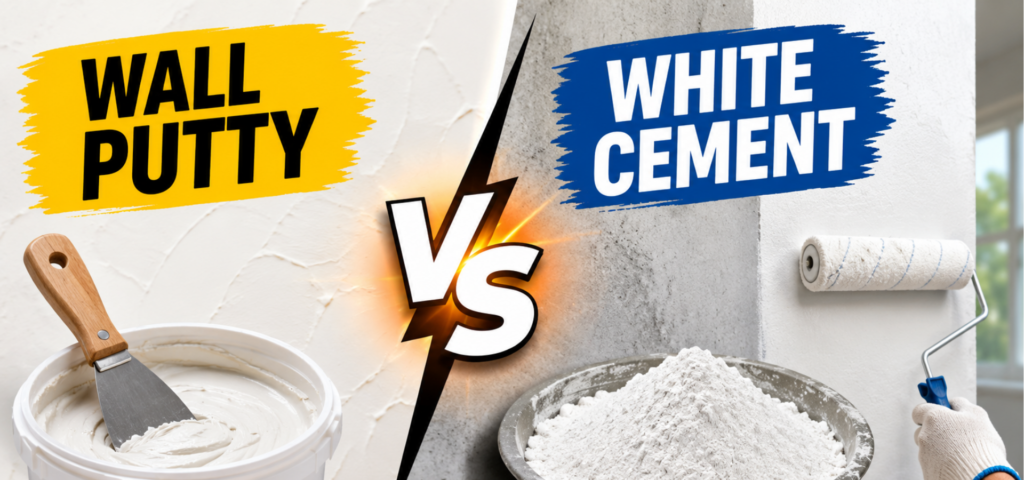
When preparing walls before painting, many homeowners become confused between wall putty and white cement. Both materials are commonly used during surface preparation, and at first glance they may appear similar. However, they serve different purposes and deliver very different results.
Choosing the wrong material can lead to uneven walls, poor paint finish, cracks, peeling, moisture problems, and reduced durability. Whether you are constructing a new house or renovating old walls, understanding the difference between wall putty and white cement is essential for achieving a smooth, long-lasting paint finish.
In this detailed guide, we will compare wall putty and white cement based on composition, application, finish quality, strength, durability, cost, moisture resistance, and ideal usage.
What is White Cement?
White cement is a type of Ordinary Portland Cement (OPC) manufactured using raw materials with very low iron content. Unlike grey cement, it has a bright white appearance and is commonly used for decorative finishes and wall preparation work.
White cement is often mixed with water to create a paste that is applied to walls before painting.
Main Features of White Cement
| Feature | Description |
|---|---|
| Color | Bright white |
| Composition | Portland cement with low iron content |
| Strength | High bonding strength |
| Surface Finish | Moderate smoothness |
| Water Resistance | Good |
| Common Uses | Wall preparation, tile grouting, decorative works |
What is Wall Putty?
Wall putty is a white cement-based or acrylic-based finishing material designed specifically to create a smooth and even surface before painting.
It acts as a leveling and filling compound that improves paint adhesion and enhances the final appearance of walls.
Wall putty is usually applied after the plastering process and before primer and paint.
Main Features of Wall Putty
| Feature | Description |
|---|---|
| Purpose | Surface smoothing before painting |
| Texture | Very fine and smooth |
| Finish | Premium paint-ready surface |
| Crack Resistance | Better than white cement |
| Paint Adhesion | Excellent |
| Common Uses | Interior and exterior wall preparation |
Wall Putty vs White Cement: Quick Comparison
| Parameter | Wall Putty | White Cement |
|---|---|---|
| Main Purpose | Smooth paint-ready finish | Base coating and bonding |
| Surface Smoothness | Excellent | Moderate |
| Paint Adhesion | Superior | Average |
| Crack Resistance | Better | Lower |
| Flexibility | Higher | Lower |
| Application Ease | Easy | Slightly difficult |
| Water Resistance | Good | Good |
| Finish Quality | Premium | Basic |
| Cost | Slightly higher | Lower |
| Ideal Use | Before painting | Base wall preparation |
Composition Difference
Understanding the composition helps explain why these materials behave differently.
White Cement Composition
White cement mainly contains:
- Limestone
- Clay
- Silica
- Gypsum
- Low iron oxide content
It behaves similarly to grey cement but with a finer and whiter finish.
Wall Putty Composition
Wall putty generally contains:
- White cement
- Polymers
- Minerals
- Fine fillers
- Additives
These additional ingredients improve:
- Smoothness
- Flexibility
- Crack resistance
- Paint bonding
This is why wall putty usually performs better as a finishing layer before painting.
Main Purpose Comparison
Purpose of White Cement
White cement is primarily used for:
- Decorative applications
- Base wall coating
- Minor repairs
- Tile joint filling
- Creating a white base
It is not specifically designed for premium paint finishing.
Purpose of Wall Putty
Wall putty is specially designed for:
- Surface leveling
- Filling imperfections
- Smoothing walls
- Improving paint adhesion
- Creating premium paint finishes
That is why professional painters almost always recommend wall putty before painting.
Which Gives a Better Paint Finish?
Winner: Wall Putty
Wall putty provides a significantly smoother and more uniform surface compared to white cement.
Surface Finish Comparison
| Surface Quality | Wall Putty | White Cement |
|---|---|---|
| Smoothness | Excellent | Moderate |
| Uniformity | High | Medium |
| Paint Absorption | Balanced | Uneven sometimes |
| Luxury Finish | Better | Average |
Why Wall Putty Gives Better Finish
Wall putty contains polymers and fine fillers that help:
- Eliminate surface undulations
- Reduce roughness
- Improve paint spreadability
- Enhance paint brightness
As a result:
- Paint looks richer
- Walls appear smoother
- Final finish becomes more professional
Crack Resistance Comparison
Cracking is a major issue in wall preparation.
Wall Putty Performance
Wall putty performs better because:
- It has improved flexibility
- It resists minor shrinkage cracks
- Polymer additives improve durability
White Cement Performance
White cement is more brittle compared to putty.
Common issues include:
- Hairline cracks
- Surface shrinkage
- Slight brittleness over time
Crack Resistance Table
| Factor | Wall Putty | White Cement |
|---|---|---|
| Flexibility | Higher | Lower |
| Shrinkage Cracks | Less common | More common |
| Durability | Better | Moderate |
| Long-Term Stability | Strong | Average |
Paint Consumption Comparison
One hidden advantage of wall putty is reduced paint consumption.
Why?
Smooth surfaces absorb paint more evenly.
This leads to:
- Better paint coverage
- Lower paint wastage
- Reduced number of coats
Paint Efficiency Table
| Parameter | Wall Putty | White Cement |
|---|---|---|
| Paint Absorption | Controlled | Uneven |
| Paint Coverage | Better | Lower |
| Paint Consumption | Reduced | Higher |
| Final Appearance | Smooth | Slightly patchy |
Water Resistance Comparison
Both products offer reasonable moisture resistance, but performance varies depending on quality and application.
Wall Putty
Good-quality cement-based putty offers:
- Water resistance
- Dampness protection
- Better paint durability
Especially useful for:
- Exterior walls
- Humid climates
- Kitchens
- Bathrooms
White Cement
White cement also provides moisture resistance but lacks the flexibility and additives present in wall putty.
Over time, moisture can cause:
- Surface chalking
- Minor cracking
- Paint peeling if not finished properly
Ease of Application
Wall Putty
Advantages:
- Smooth application
- Easy sanding
- Faster finishing
- Better leveling
Painters generally prefer wall putty because it creates a more workable surface.
White Cement
Challenges:
- Faster setting
- Harder sanding
- Requires experienced handling
- Less forgiving during finishing
Application Difficulty Table
| Parameter | Wall Putty | White Cement |
|---|---|---|
| Ease of Mixing | Easy | Moderate |
| Surface Leveling | Excellent | Average |
| Sanding | Easy | Difficult |
| Painter Friendliness | High | Medium |
Durability Comparison
Wall Putty
Wall putty increases overall paint life by:
- Improving bonding
- Reducing surface defects
- Preventing flaking
Paint on putty-coated walls usually lasts longer.
White Cement
White cement alone may not provide the same long-term finishing stability.
Over time:
- Paint adhesion may weaken
- Surface roughness may appear
- Small cracks may develop
Durability Table
| Factor | Wall Putty | White Cement |
|---|---|---|
| Paint Life | Longer | Moderate |
| Surface Stability | Better | Average |
| Resistance to Flaking | Higher | Lower |
| Long-Term Finish | Premium | Basic |
Cost Comparison
White Cement
Advantages:
- Lower material cost
- Budget-friendly
- Easily available
Wall Putty
Advantages:
- Better finish quality
- Reduced paint usage
- Longer durability
Although wall putty costs slightly more initially, it often reduces long-term maintenance and repainting expenses.
Approximate Cost Comparison
| Material | Average Cost Range |
|---|---|
| White Cement | Lower |
| Wall Putty | Slightly Higher |
However, labor and paint savings often make wall putty more economical overall.
Interior vs Exterior Usage
| Area | Recommended Material |
|---|---|
| Interior Walls | Wall Putty |
| Exterior Walls | Exterior-grade Wall Putty |
| Decorative Repairs | White Cement |
| Tile Filling | White Cement |
| Premium Painting | Wall Putty |
Can White Cement Replace Wall Putty?
Technically, white cement can be used before painting, but it does not provide the same level of smoothness, crack resistance, and finish quality as wall putty.
Using only white cement may result in:
- Rougher surfaces
- Higher paint absorption
- Reduced paint life
- Less premium appearance
For modern homes, wall putty is usually the better choice.
Can Wall Putty Replace White Cement?
Wall putty is not a structural replacement for white cement in applications such as:
- Tile grouting
- Decorative cement work
- Crack filling in masonry
- Cement repairs
Each material has its own purpose.
Types of Wall Putty
1. White Cement-Based Putty
Most common in India.
Features:
- Durable
- Moisture-resistant
- Strong bonding
2. Acrylic Wall Putty
Water-based putty used mainly for interiors.
Features:
- Smooth finish
- Lower moisture resistance
- Faster drying
Common Mistakes to Avoid
1. Applying Paint Directly on Plaster
This leads to:
- Uneven finish
- Higher paint consumption
- Poor durability
2. Using Thick White Cement Layers
Can cause:
- Cracking
- Uneven surfaces
- Difficult sanding
3. Skipping Primer After Putty
Primer is essential for:
- Paint bonding
- Uniform finish
- Long-lasting color
Recommended Wall Preparation Process
Ideal Sequence
| Step | Process |
|---|---|
| 1 | Wall plaster |
| 2 | Surface cleaning |
| 3 | Wall putty application |
| 4 | Sanding |
| 5 | Primer coat |
| 6 | Paint application |
This process provides the best finish and durability.
Best Choice for Different Needs
| Requirement | Best Option |
|---|---|
| Premium smooth finish | Wall Putty |
| Budget surface preparation | White Cement |
| Luxury painting | Wall Putty |
| Decorative repairs | White Cement |
| Long paint life | Wall Putty |
| Moisture resistance | Wall Putty |
Expert Recommendation
For modern residential painting projects, wall putty is generally the preferred choice before painting because it offers:
- Better smoothness
- Superior paint adhesion
- Improved durability
- Reduced cracking
- Enhanced final appearance
White cement still remains useful for construction-related applications and decorative cement work, but it is no longer considered the ideal standalone wall preparation material for premium painting.
Final Verdict: Wall Putty vs White Cement
If your goal is a smooth, durable, professional-quality paint finish, wall putty is the clear winner.
Choose Wall Putty If You Want:
- Premium wall finish
- Better paint life
- Smooth surfaces
- Lower maintenance
- Modern interior quality
Choose White Cement If You Need:
- Basic wall preparation
- Decorative cement applications
- Budget-friendly repair work
- Tile grouting or patching
For most modern homes, the ideal solution is:
White Cement for Construction + Wall Putty Before Painting
This combination delivers the best durability, appearance, and long-term performance for both interior and exterior walls.